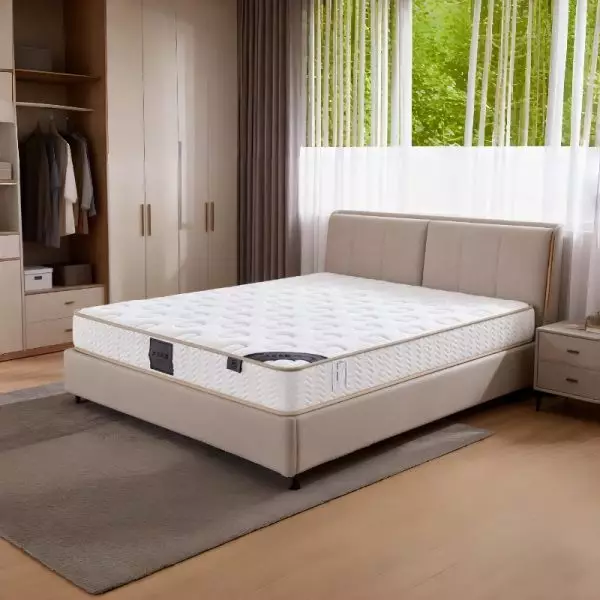
Firmness is one of the first characteristics buyers consider when selecting a spring mattress, but it is not determined by the springs alone. The overall feel comes from the interaction between the support core, comfort layers, cover, and mattress construction. For retailers, hotel suppliers, and furniture importers, understanding these factors makes it easier to specify products for different customer preferences and market positions.
Spring Mattress Firmness Starts With the Coil System
The spring unit plays a central role in determining how much resistance a mattress provides. Coil height, wire gauge, coil count, shape, number of turns, and the type of steel can all influence how a spring system responds under pressure. Therefore, simply comparing coil counts does not provide a complete picture of firmness.
Different coil designs can also create different sensations. Pocket springs are individually wrapped, allowing each spring to respond more independently to pressure. This can provide localized support and reduce the extent to which movement transfers across the mattress. Traditional interconnected systems behave differently because their springs have stronger mechanical connections.
For spring mattress manufacturers, coil specifications can therefore be adjusted as part of product development. A manufacturer may combine a particular spring height and wire specification with different zoning arrangements to create mattresses aimed at soft, medium, medium-firm, or firm markets.
Comfort Layers Can Change the Perceived Firmness
Common comfort materials include polyurethane foam, memory foam, latex, fiber padding, and other cushioning materials. The thickness and characteristics of these layers affect how deeply a sleeper sinks into the mattress and how quickly the surface responds.
A thicker comfort system generally creates more cushioning and can produce a softer initial feel. In contrast, firmer mattresses commonly use thinner comfort layers, allowing the support core to have a greater influence on the overall sensation.
This is why two spring mattresses with similar coil systems can feel noticeably different. Changing the material, density, thickness, or arrangement of the upper layers can alter the balance between surface cushioning and underlying support.
Mattress Thickness Also Affects the Overall Feel
Thickness is another factor that should be considered when evaluating firmness. A mattress consists of multiple components, and changing the thickness of one layer can affect how the sleeper interacts with the layers underneath.
For example, adding a substantial comfort layer can increase cushioning between the sleeper and the spring unit. A thinner comfort structure may allow the support characteristics of the coils to become more noticeable. Sleep Foundation explains that the thickness and composition of the comfort system contribute to the mattress’s resulting feel.
For B2B buyers, mattress thickness should therefore be considered together with the intended firmness level. Specifying a firmness target without defining the complete layer construction can lead to inconsistent expectations between a buyer and manufacturer.
Zoning Can Create Different Support Levels
Spring systems can also be designed with zones that provide different levels of support across the sleeping surface. A zoned construction may use different coil specifications or arrangements in areas where additional support or greater adaptability is desired.
This approach allows manufacturers to develop a more differentiated feel across the mattress. Suisin Furniture’s spring mattress production information describes independent pocket springs with smart coil designs and zoning arrangements as part of its current mattress development approach.
Edge Support Can Influence Firmness Perception
The perimeter of a mattress can also affect how firm or stable it feels, particularly when a person sits near the edge or sleeps close to the side. Reinforced edges can provide additional structural stability and make the usable surface feel more consistent.
Edge construction is therefore another specification worth discussing with spring mattress manufacturers. It should be evaluated alongside the coil unit and comfort materials rather than treated as an isolated feature.
For commercial buyers, edge support can also influence how a mattress performs in practical use.
How We Develop Spring Mattresses at Suisin Furniture
We at Suisin Furniture consider firmness part of the overall mattress configuration rather than an isolated spring specification. Each project begins with a clear assessment of factors including mattress size, thickness, firmness, spring type, comfort materials, target market, price positioning, and packaging requirements.
We use independent pocket spring systems with different coil specifications, zoning arrangements, and supporting materials. By changing the upper comfort layers, fabric, quilting, thickness, edge support, and firmness level, we can develop mattress models for different customer groups and market positions.
This approach is particularly useful for B2B customers seeking coordinated product collections. A retailer, distributor, hotel supplier, or furniture importer can specify a desired market position and work with the manufacturer to establish a suitable combination of support and comfort characteristics.
What Should Buyers Ask a Spring Mattress Factory?
When comparing suppliers, buyers should look beyond general firmness labels. Specifications should cover spring type, coil configuration, comfort materials, mattress thickness, edge construction, and intended firmness. Since firmness scales can vary between manufacturers, defining construction and performance requirements in advance makes supplier comparisons more meaningful.
For businesses developing private-label collections, customization capability is equally important. A capable spring mattress factory should be able to adjust construction details according to target customers, price points, regional preferences, and distribution channels.
Firmness Is the Result of the Whole Structure
The firmness of a spring mattress comes from the interaction of its components. The coil system provides the foundation, while comfort layers determine much of the surface sensation. Thickness, zoning, edge reinforcement, and cover construction then contribute to the final experience.
For buyers working with Suisin Furniture, understanding these factors helps define mattress specifications more precisely. Instead of choosing a firmness label alone, businesses can specify the construction needed to achieve the desired feel.
When evaluating spring mattress manufacturers, it is better to treat firmness as part of the overall product design. Combining the right spring system, comfort materials, and structural details can create a mattress suited to the target market with consistent manufacturing requirements.