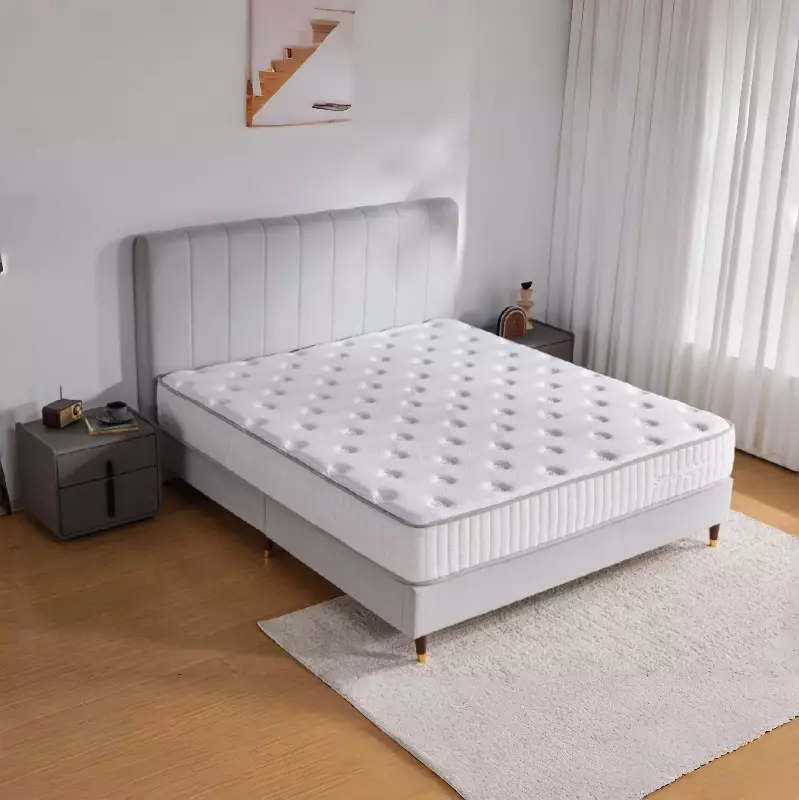
Choosing between a memory foam mattress and a spring mattress is one of the most important decisions for mattress buyers and retailers. Each option offers distinct advantages, making it suitable for different sleep preferences and market segments. Understanding the differences in comfort, support, durability, and maintenance helps buyers make informed purchasing decisions. For businesses sourcing products from a China mattress manufacturer, knowing these characteristics also makes it easier to build a product portfolio that satisfies diverse customer needs. Click here to see our mattress products.
Comfort and Pressure Relief: Memory Foam vs Spring Mattress
The most noticeable difference between memory foam and spring mattresses is how they respond to body weight. Memory foam is designed to contour closely to the sleeper’s body, evenly distributing weight and reducing pressure on the shoulders, hips, and lower back. This personalized support makes memory foam particularly popular among side sleepers and people looking for enhanced pressure relief.
Spring mattresses provide a different sleeping experience. Instead of contouring deeply, the coil system creates a more responsive surface that supports the body while allowing easier movement during sleep. Many customers prefer this traditional feel because it offers a balanced combination of support and bounce without excessive sinkage.
A professional China mattress manufacturer can produce both mattress types while offering various firmness levels and material combinations to meet different market requirements.
Support and Motion Isolation Compared
Support is another important factor when comparing these two mattress categories. Memory foam distributes body weight across the mattress surface, helping maintain spinal alignment while minimizing pressure points. Its ability to absorb movement also significantly reduces motion transfer, making it an excellent choice for couples.
Spring mattresses rely on steel coils to provide structural support. Modern pocket spring systems improve upon traditional innerspring designs by allowing each spring to move independently. This independent movement improves body support while reducing motion disturbance compared to conventional connected coil systems.
Hybrid mattresses combine both technologies by integrating memory foam comfort layers with individually wrapped pocket springs. This design allows buyers to enjoy pressure relief together with responsive support, making hybrid models increasingly popular in today’s bedding market.
Breathability and Temperature Performance
Temperature regulation is an area where the two mattress types differ considerably.
Traditional memory foam tends to retain more body heat because its dense structure limits airflow. However, many modern memory foam mattresses now incorporate cooling gels, breathable foams, or open-cell technology to improve ventilation and sleeping comfort.
Spring mattresses naturally promote airflow because the open spaces between the coils allow heat to dissipate more efficiently. Customers living in warmer climates or those who naturally sleep hot often appreciate the cooler sleeping environment that spring mattresses provide.
When sourcing products from a China mattress manufacturer, buyers should evaluate available cooling technologies and ventilation features according to the preferences of their target markets.
Durability, Maintenance, and Long-Term Value
Durability is an essential consideration for both retailers and consumers.
High-quality memory foam mattresses generally maintain their shape for many years while resisting sagging when properly cared for. They usually require only periodic rotation to promote even wear, making maintenance relatively simple.
Spring mattresses are also highly durable, particularly those built with premium pocket spring systems. Depending on their construction, they may benefit from occasional rotation to maintain consistent comfort and support across the entire sleeping surface.
Rather than asking which mattress lasts longer, buyers should evaluate the quality of materials, manufacturing standards, and intended usage. Premium products in both categories can provide excellent long-term performance when manufactured with reliable components and proper quality control.
Which Mattress Is the Better Choice?
There is no universal winner in the comparison between memory foam and spring mattresses because each serves different customer needs.
Memory foam mattresses are well suited for customers who prioritize pressure relief, body contouring, and reduced motion transfer. They are often recommended for sleepers seeking a softer, more adaptive sleeping experience.
Spring mattresses appeal to customers who value responsive support, better airflow, easier movement, and a more traditional mattress feel. Their versatility makes them suitable for a wide range of sleeping positions and consumer preferences.
Many retailers choose to offer both options, allowing customers to select the mattress that best matches their comfort expectations, budget, and lifestyle. Working with an experienced China mattress manufacturer also provides greater flexibility in selecting foam, spring, or hybrid collections for different market segments.
Make the Right Mattress Choice with the Right Manufacturing Partner
Selecting between memory foam and spring mattresses ultimately depends on the needs of the end customer. By understanding the strengths of each design, buyers can create product selections that appeal to a broader range of consumers while improving customer satisfaction. As a trusted China mattress manufacturer, Suisin Furniture combines advanced manufacturing capabilities, strict quality standards, and diverse mattress solutions to help global partners deliver reliable, comfortable, and competitive bedding products for every market.