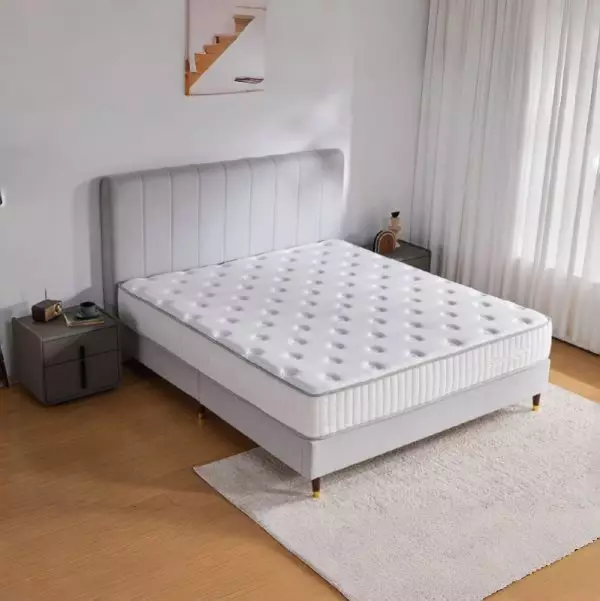
For importers, distributors, retailers, hospitality suppliers, and private-label brands, understanding mattress wholesale pricing is essential before negotiating with a factory. A unit quotation can look attractive at first glance, yet two mattresses with similar appearances may have very different production costs.
The reason is simple: factory pricing reflects the complete product specification and manufacturing process. Materials, dimensions, construction, order volume, customization, packaging, labor, and quality control can all influence the final quotation.
Mattress Construction Is the Starting Point
Mattress construction is one of the main factors affecting manufacturing cost. Foam, spring, hybrid, and handmade mattresses require different materials and production processes. Steel wire, foam, and other components are common manufacturing inputs, with the exact cost depending on the support system, number of layers, and materials used.
Material Selection Directly Affects Factory Cost
The type, quantity, thickness, density, and quality of each material can change the final unit cost. For example, higher-density foam, additional comfort layers, specialized spring systems, or premium fabrics can increase material consumption and production costs. Buyers should provide detailed product specifications when requesting quotations so that different offers can be compared on a like-for-like basis.
Size and Thickness Matter
Larger or thicker mattresses generally require more fabric, foam, springs, padding, and other materials. This is important when developing collections with multiple sizes, as pricing for one size should not automatically be used to estimate another. Requesting size-specific quotations can help buyers plan budgets more accurately.
Production Volume Affects Unit Pricing
Order volume can influence unit costs because manufacturers need to allocate materials, labor, equipment, and production time. Larger runs may spread certain setup and operating costs across more units. Buyers should therefore confirm that the quoted price applies to their actual order volume and discuss pricing for future repeat orders.
Customization Can Add Costs
Customization can make a mattress better suited to a specific market, but changes to dimensions, firmness, materials, covers, labels, designs, or packaging may require additional sampling and production preparation. Before placing an order, buyers should confirm which customization services are included in the quotation and which may incur extra charges.
Packaging Can Affect the Total Wholesale Equation
Mattresses are bulky products, so packaging can influence both factory handling and downstream logistics. A supplier may offer different packaging formats depending on the mattress construction and the buyer’s distribution model.
At Suisin Furniture, we provide both flat-packed and compressed packaging options within our mattress range. Our product collection includes handmade mattresses, compressed mattresses, and classic traditional mattresses, with different series designed for different customer groups and applications.
For buyers, packaging should be considered alongside the factory quotation. A lower production price may not provide the best overall value if the packaging format creates higher storage or transportation requirements.
Labor and Manufacturing Efficiency Matter
A mattress passes through multiple production stages, including material preparation, cutting, assembly, sewing, quilting, inspection, and packaging. The amount of labor required depends on the construction and customization level.
Manufacturing efficiency can therefore influence the factory cost even when two suppliers use similar materials. Equipment, production organization, worker productivity, and factory overhead all contribute to the cost of converting materials into a finished product.
Quality Control Is Part of the Price
Quality control also carries a cost, but it can protect buyers from more expensive problems later. Inspections may cover dimensions, appearance, construction, materials, stitching, packaging, and other requirements established in the product specification.
Therefore, a factory quotation should be evaluated in the context of the quality system supporting the product rather than viewed as a standalone number.
What We Consider When Supporting Wholesale Buyers
At Suisin Furniture, we understand that different buyers require different combinations of product construction, price positioning, customization, and supply arrangements. Our mattress collection covers memory foam, hybrid, spring, and compressed designs, and we support OEM and ODM projects involving size, firmness, materials, design, packaging, and branding.
Our production base in Foshan covers 200,000 square meters, and we provide factory-direct manufacturing, quality control, packaging, and export support for global buyers.
How to Compare a Wholesale Mattress Factory
When comparing a wholesale bed mattress factory, buyers should request quotations based on identical specifications. Confirm the mattress type, dimensions, thickness, internal construction, materials, firmness, cover, packaging, order quantity, customization, and delivery terms.
It is also useful to separate factory cost from landed cost. Freight, duties, insurance, customs charges, inland transportation, and warehousing can affect the final purchasing expense even when the factory quotation remains unchanged.
Look Beyond the Lowest Factory Price
Mattress wholesale pricing is determined by a combination of product design, material consumption, production volume, customization, packaging, labor, and quality control. A lower quotation does not automatically represent better value if it reflects a different specification or weaker service package.
For global buyers, the more useful approach is to compare equivalent products and understand what each quotation includes. By evaluating the complete cost structure, businesses can select suppliers more confidently, negotiate from a clearer position, and build a wholesale mattress program that remains commercially sustainable as order volumes grow.