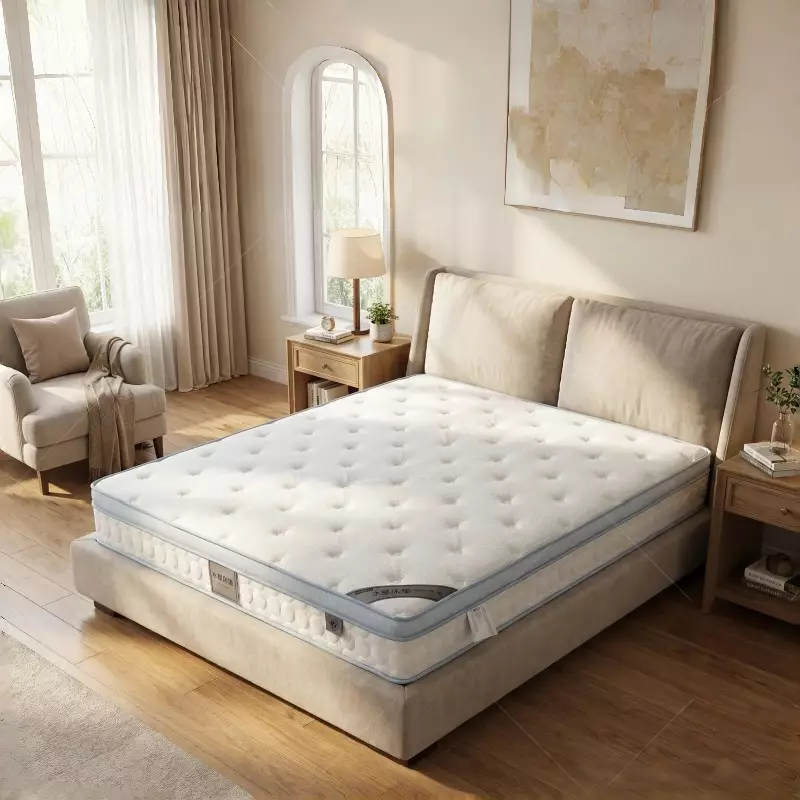
Choosing the appropriate mattress firmness across different markets plays a crucial role in helping retailers meet diverse customer expectations. Selecting proper mattress support levels is the core of firmness decision-making, as mattress support can be divided into five mainstream grades applicable to global bedding markets: extra soft, soft, medium, medium-firm, and extra firm. Each level fits distinctive regional groups and usage scenarios. This article explores the essential factors to consider when selecting mattress firmness, matches graded support levels with segmented markets, and analyzes the optimal firmness choice for global retailers. Click here to see our mattress products.
Market-Based Insights for Mattress Firmness Selection
Choosing the appropriate mattress firmness for different markets begins with a clear understanding of regional sleep habits, cultural expectations, and consumer comfort preferences. Combined with five standardized support levels, market-oriented selection rules can be summarized clearly. Extra firm mattresses deliver rigid spinal support with minimal sinking, which suits markets that value traditional hard bedding habits. Medium-firm mattresses balance support and softness, regarded as the most universal option for mass markets. Medium and soft mattresses feature obvious body wrapping performance, catering to developed urban markets with high stress levels. Extra soft mattresses offer extreme pressure relief, mainly applied to niche high-end leisure bedding scenarios.
From a global sales perspective, medium-firm and extra firm mattresses are the most marketable choices for general wholesalers, as they cover the largest consumer groups and reduce inventory risks. Recognizing these regional differences in mattress firmness preference is essential for China bed mattress manufacturers to build product strategies that align with local market demand and improve overall competitiveness.
Regional Sleep Preferences and Consumer Behavior
Consumer expectations for mattress firmness are often shaped by lifestyle, climate, and even traditional bedding habits. Markets that prioritize orthopedic support, including most non-urban areas and regions with aging populations, usually lean toward medium-firm to extra firm mattresses. Hot and humid regions also favor firmer mattresses, as hard bedding avoids heat accumulation and bacterial growth. By comparison, urban and younger demographics in high-income markets increasingly prefer medium or soft hybrid designs that enhance relaxation. Extra soft mattresses are only popular among a small group of luxury sleep consumers.
These variations make it important for manufacturers and buyers to avoid a one-size-fits-all approach. Retailers can allocate product proportion based on market positioning: stock more medium-firm mattresses for bulk orders, prepare soft models for urban high-end channels, and launch extra-firm styles for orthopedic and senior sleep markets.
Aligning Firmness with Market Trends
Current global trends show a growing demand for hybrid mattresses that combine the resilience of pocket springs with the adaptability of foam layers. Adjustable internal materials can precisely control mattress support levels: high-density foam thickening raises overall firmness, while thick memory foam weakens support and boosts softness. Memory foam, wave-structured foam, and high-density support materials are widely used to achieve balanced sleep feelings covering all five support grades.
For cross-border sales, configuring multi-firmness mattress series is more profitable than launching single-style products. Adjusting the firmness level through layer configuration allows brands to better respond to shifting preferences while maintaining product competitiveness and long-term durability.
Balancing Comfort, Cost, and Product Positioning
Choosing the right firmness is not only about comfort but also about cost efficiency and market positioning. Among all support grades, extra-firm and medium-firm mattresses adopt simple material composition, which cuts raw material and production costs, perfectly matching entry-level wholesale markets. Medium and soft mattresses require high-quality slow-rebound foam, bringing higher production costs and targeting premium segments focusing on enhanced softness, motion isolation, and pressure relief. Extra soft mattresses cost the most with limited market demand, suitable only for customized high-end orders.
To sum up, medium-firm mattresses are the priority choice for most cross-border retailers, striking the best balance among cost, public acceptance and market adaptability. A well-structured product lineup covering diversified support levels helps meet the expectations of diverse buyers without compromising overall quality or value.
Reliable Mattress Partnership for Global Retailers
Matching classified mattress support levels with regional sleep demands is the key to expanding global bedding business. Reasonable firmness layout can effectively cut operational risks and boost market sales for overseas retailers. As reliable China bed mattress manufacturers, we at Suisin Furniture own mature layered material technology to customize all grades of mattress support. We can flexibly develop cost-effective entry-level models and functional premium mattress products for global distributors. Relying on standardized production and market-oriented R&D advantages, we provide stable, tailored bedding solutions to help overseas clients capture segmented market shares steadily.