For furniture importers, e-commerce brands, wholesalers, and retailers, a compressed sofa can solve a practical logistics challenge. Instead of shipping a bulky sofa at its full size, compression packaging can reduce the space required for transportation and storage.
However, selecting a compressed sofa factory involves more than checking whether it offers vacuum-packed furniture. Buyers should also consider construction, compression and recovery performance, packaging, customization, quality control, and production capacity.
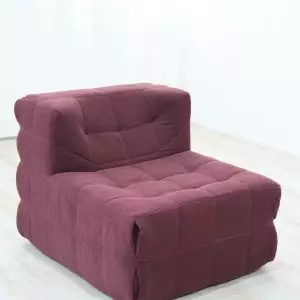
Start With the Sofa Construction
The first question should be how the sofa is designed to withstand compression and return to its intended form after unpacking. Buyers should understand the frame, foam, upholstery, internal support, and other structural components used in the selected model.
A compressed sofa depends heavily on suitable materials and construction. Foam-based components must be selected according to the intended seating characteristics and compression process, while the upholstery and internal structure need to remain compatible with the packaging method.
For this reason, buyers should request a detailed specification rather than evaluating a supplier from product photographs alone.
Examine the Compression and Packaging Process
Packaging is central to the value proposition of compressed furniture. A suitable factory should be able to explain how the sofa is compressed, protected, packaged, and prepared for transportation.
Ask for the finished carton dimensions and packed weight of the exact model under consideration. These figures allow buyers to estimate container loading, warehouse requirements, and shipping expenses more accurately.
The packaging should also protect the sofa during international transportation. Buyers should check the carton construction, internal protection, labeling, and unpacking instructions before approving a production order.
Check Recovery After Unpacking
A compressed sofa is expected to regain its intended shape after being removed from its packaging. Buyers should therefore evaluate recovery as part of the product approval process.
A useful approach is to test a physical sample and document the unpacking procedure. The buyer can record the initial appearance, recovery period, dimensions, surface condition, and seating performance before approving the final specification.
This information can also become part of the customer’s product instructions. Clear unpacking guidance helps online retailers explain what customers should expect when a sofa arrives in a compact package.
Evaluate Materials, Comfort, and Quality Control
Compression efficiency should not come at the expense of seating comfort. Buyers should ask about the foam type, density, thickness, support structure, upholstery fabric, and desired firmness. Since terms such as soft, medium, and firm can vary in interpretation, an approved reference sample and detailed material specifications can help maintain consistency across production runs.
Quality control should then verify that these specifications are followed throughout production. For compressed sofas, buyers should pay particular attention to dimensional consistency and packaging quality, ensuring the finished and packed products match the approved sample and carton requirements. It is also useful to confirm how the factory handles defects or specification deviations, especially for orders shipped to overseas markets.
Look for OEM and ODM Capability
A suitable compressed sofa supplier China partner should be able to accommodate the requirements of the buyer’s sales market. These requirements may include dimensions, upholstery, colors, configurations, branding, packaging, and product labeling.
OEM and ODM capabilities can be particularly useful for online furniture brands. An existing design can provide a faster starting point, while more extensive development may be appropriate for a brand seeking a distinctive collection.
We at Suisin Furniture support furniture buyers with customized production and provide sofa products alongside mattresses, beds, and other home furniture. Our broader product offering allows buyers to consider compressed sofas as part of a wider furniture sourcing program rather than as an isolated product.
Compare Production Capacity, Lead Times, and Export Experience
A factory may produce an attractive sample but still struggle with larger commercial orders. Buyers should therefore assess production capacity, MOQ, sampling arrangements, lead times, and the supplier’s ability to handle repeat orders consistently. For e-commerce brands, it is also important to confirm whether customized models require different production schedules, as this can affect product launches and inventory planning.
Production capacity should also be considered alongside export experience. International buyers need a supplier familiar with export packaging, shipping documentation, container loading, and overseas communication. For compressed sofas, packaging can affect container utilization, warehouse handling, and last-mile delivery. Buyers should also clarify the full landed cost, including factory pricing, freight, insurance, duties, and destination charges.
Compare Suppliers by Total Value
When comparing Chinese compressed sofa suppliers with other factories, avoid making the decision solely on unit price. A cheaper quotation may reflect a different foam specification, fabric, packaging standard, customization level, or quality-control process.
Instead, compare suppliers using the same product specification. Check construction, materials, dimensions, packed size, weight, customization, MOQ, lead time, inspection, and shipping terms side by side.
This approach makes it easier to identify whether a price difference reflects genuine manufacturing efficiency or simply a lower product specification.
Make the Factory Selection a Supply Chain Decision
Choosing Suisin Furniture as your compressed sofa factory in China means looking beyond compression technology. We combine product construction, materials, comfort, recovery performance, packaging, quality control, customization, production capacity, and export support to meet different buyer requirements.
For global buyers, we can turn detailed product specifications into consistent production while considering the logistics needs of each target market. By working with Suisin Furniture, businesses can reduce sourcing uncertainty and build a more reliable compressed furniture supply chain.