When customers receive a rolled mattress, the expansion process after opening the package is an important part of the product experience. The mattress needs to return to its intended shape while keeping its internal structure stable. For B2B buyers, understanding how this process is controlled helps them evaluate product quality, packaging methods, and supplier capabilities.
At Suisin Furniture, we pay attention to mattress structure, compression methods, and material selection during development. Our experience with different market requirements allows us to provide mattress solutions for distributors, retailers, and brand partners. This article explains how rolled up mattress manufacturers manage expansion after unboxing and what factors influence the final performance of a compressed mattress.
Understanding the Expansion Process After Unboxing
A rolled mattress is compressed before shipping to reduce its package size. After the packaging is removed, the mattress gradually recovers toward its intended thickness as the compressed materials decompress. The speed and stability of this process depend on the materials, foam structure, and compression method.
For buyers working with bed in a box mattress manufacturers, expansion control is an important product consideration. A suitable design should allow the mattress to recover its shape while maintaining comfort and support features after transportation.
Foam layers usually play a major role in the expansion process. High-density foam can slowly recover after compression because of its internal structure. The foam density, thickness, and production process all influence how the mattress performs after being unpacked.
Spring systems also affect the recovery process. Individually wrapped springs need to maintain their original shape after compression. A well-designed hybrid structure allows the foam and spring layers to work together during expansion.
Material Selection Influences Recovery Performance
Different mattress materials respond differently to compression. Memory foam, high-density foam, and hybrid structures each have their own recovery characteristics. Manufacturers need to test how materials behave before deciding suitable compression levels.
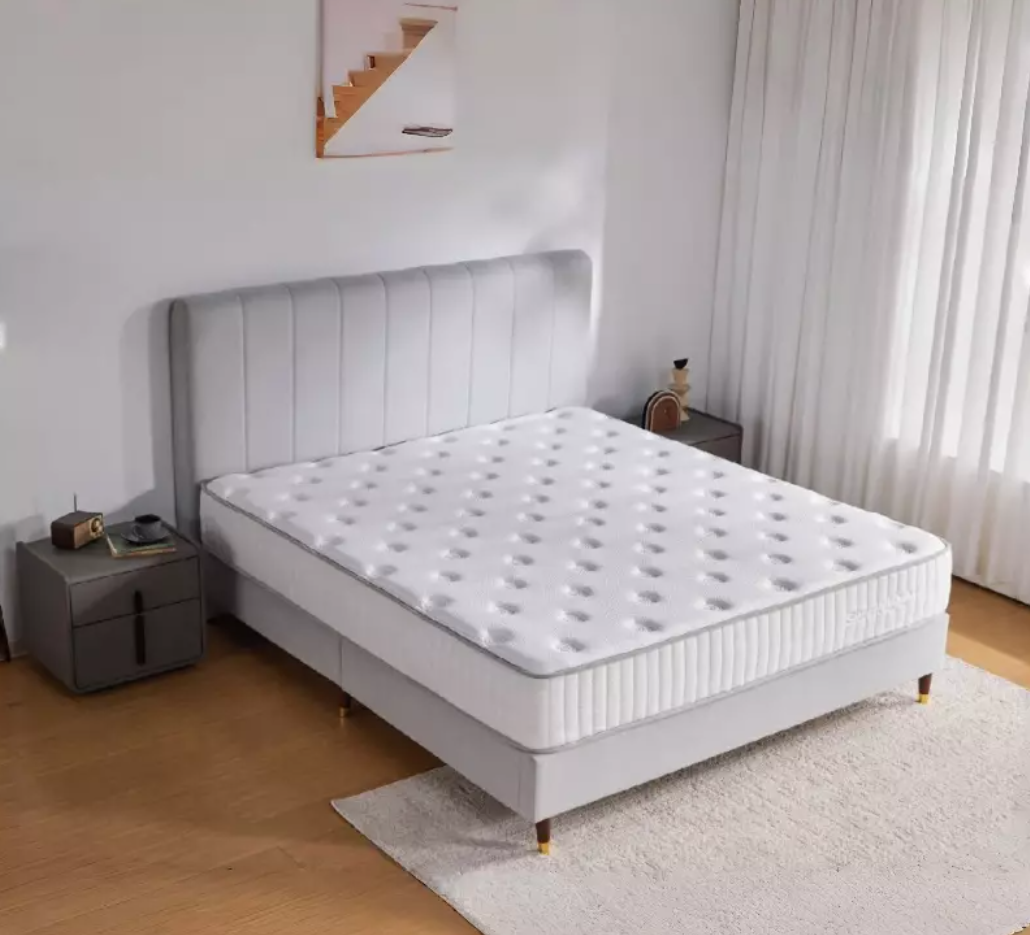
The High-Density Foam Hybrid Mattress with Smart Pocket Springs MT-203 combines foam layers with individually wrapped spring support. Its structure is designed to balance cushioning and support while maintaining mattress shape during regular use.
The Smart Pocket Spring Support system uses individually wrapped springs to provide balanced support and help reduce motion transfer. This design allows different areas of the mattress to respond separately to pressure, which can improve overall stability.
High-density foam comfort is another key part of the mattress structure. Dense foam layers add cushioning and body support while helping the mattress maintain its shape over time. Material selection needs to consider both the unboxing stage and long-term daily use.
How Compression Technology Affects Mattress Quality
Compression is not simply about reducing mattress size. It requires careful control of pressure, timing, and packaging conditions. Excessive compression may affect material recovery, while insufficient compression may increase shipping volume.
Many rolled up mattress manufacturers use vacuum compressed packing to make transportation more efficient. This method removes air from the package and reduces the overall volume of the mattress before delivery.
The vacuum compressed packing method used for suitable mattress designs can reduce shipping volume by up to 80%. This helps save storage space and lower transportation costs for businesses handling bulk shipments.
For distributors and retailers, smaller packaging can simplify warehouse management and delivery planning. However, compression methods still need to match the mattress structure to maintain product performance after opening.
Testing Expansion Stability Before Delivery
Quality control is an important step before compressed mattresses reach the market. Manufacturers usually evaluate thickness recovery, surface condition, and structural stability after the mattress is removed from its packaging.
Testing helps identify whether the mattress can return to its expected form within a reasonable period. It also allows manufacturers to adjust foam combinations, spring systems, or compression settings when needed.
For B2B customers, working with bed in a box mattress manufacturers that understand production testing can reduce uncertainty during large-scale orders. A stable expansion process supports consistent product presentation across different batches.
At Suisin Furniture, we consider material performance, production control, and customer requirements when developing mattress products. Our approach includes evaluating product structures and packaging methods to meet different market applications.
Packaging Design Supports Efficient Distribution
The packaging of a rolled mattress influences both logistics and customer handling. Compact packaging makes storage easier for warehouses and provides more flexibility during transportation.
A suitable package design should protect the mattress during shipping while allowing customers to open it conveniently. The balance between protection and compression level is an important part of mattress production.
For businesses purchasing mattresses in larger quantities, packaging efficiency can affect inventory planning and shipping arrangements. A practical design helps connect manufacturing, logistics, and market distribution.
The MT-203 mattress uses a hybrid structure with foam and smart pocket springs to support different requirements. Its vacuum compressed packing design helps reduce package size while keeping the mattress structure suitable for recovery after unboxing.
Key Factors Behind Reliable Rolled Mattress Performance
The performance of a rolled mattress is influenced by more than the expansion result after opening. For B2B buyers, supplier capability, production consistency, and customization support are also important factors when evaluating potential products.
Different markets may have different expectations for mattress firmness, size options, materials, and packaging methods. Manufacturers that can communicate clearly about these requirements are easier to work with during product planning and order preparation.
Supporting Better Mattress Solutions Through Manufacturing Experience
At Suisin Furniture, mattress solutions are developed according to different customer applications and market requirements. Their High-Density Foam Hybrid Mattress with Smart Pocket Springs MT-203 combines foam comfort, spring support, and a compact packaging design for business partners.
For brands and distributors, choosing a suitable mattress supplier involves reviewing product quality, customization ability, and production coordination. A flexible manufacturing process can help businesses adjust product details based on market feedback and create more suitable mattress options for their customers.